

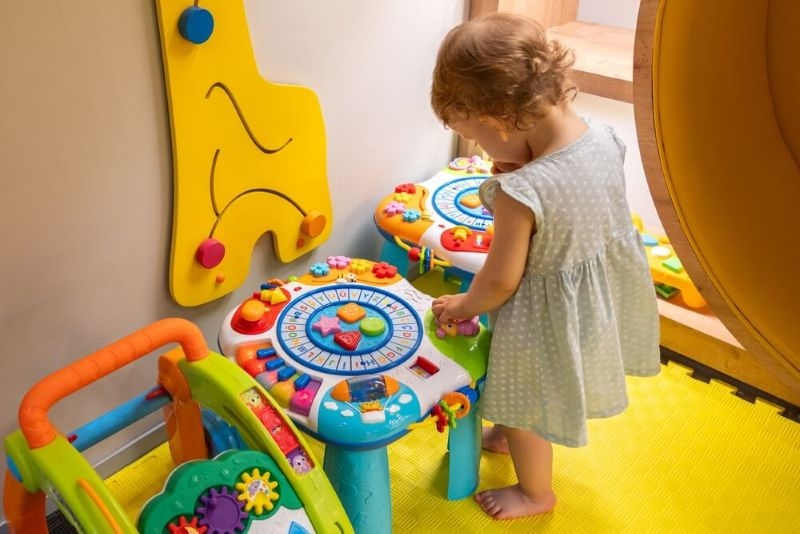
Toddlers do not learn well by sitting still for long. Most parents already know this. A child touches things, throws blocks, pretends a spoon is an airplane, talks to stuffed animals — that is learning happening in real time. Fast too. Their brains are busy even when adults think they are “just playing.” That matters more than many worksheets or forced lessons at this age. Play builds thinking, movement, speech, confidence, and patience. Sometimes all at once. Kids remember what they experience, not what gets repeated at them ten times. In this blog, we will look at how play shapes toddler growth, supports emotions, improves learning skills, plus why playful environments matter so much in early years.
The biggest reason children respond to play-based learning is simple — it feels natural to them. Toddlers are curious before they are disciplined. They want movement, noise, repetition, mess. Through playful experiences, they begin understanding cause and effect, emotions, language, and even social rules without realizing it.
When you see a toddler stacking cups, they’re not just biding their time. They’re trying out balance, learning about size, figuring out just how much pressure to use, and, honestly, finding out how patient they can be. The blocks tumble down. They pick them up and try all over again. Tiny moments like these quietly shape how their brains work.
Some of the benefits show up quietly, sometimes so slowly you hardly notice:
But it’s not picture-perfect every day. Toddlers still fall apart over little things. That’s just part of it.
Not every learning activity needs expensive toys or fancy setups. Actually, toddlers often prefer random household items. Boxes, spoons, pillows, paper cups. Adults overcomplicate things sometimes.
Sensory bins with rice, water, sand, or soft fabric help toddlers process textures, sounds, and movement. It may look messy. Usually is. Yet sensory play strengthens focus, along with fine motor control. Children compare objects, test reactions, and describe feelings using new words.
Even pouring water between cups teaches coordination plus concentration.
Now, pretend kitchens, toy doctor kits, grocery store games—these let kids act out the world they see. While they’re pretending, they’re learning how to put sentences together. They’re working out how to show feelings and talk to people. They’re learning how conversations actually work.
Movement games matter, too. Toddlers are always on the move—jumping, rolling, leaping over couch cushions, or chasing bubbles in the yard. All that energy isn’t a waste. It’s building muscle, balance, and body awareness.
Many parents worry that play is not “real learning.” But strong early childhood education programs already understand the value of playful instruction.
A classroom filled only with strict rules, silent tables, and repetitive drills can limit curiosity. Some structure matters, yes. Toddlers still need routines. But overly controlled environments often reduce creativity along with confidence.
Good early education spaces usually include:
Teachers in play-focused classrooms guide children rather than control them every second. Big difference there.
Toddlers do not magically learn sharing because adults say “share nicely.” They learn it through repeated social experiences. During group games, children negotiate, argue, wait, and copy behavior. Sometimes cry. Then recover.
These interactions help toddlers understand emotions — their own plus other people’s. Early friendship skills start forming here, rough around the edges, but real.
Give kids small choices—what color to draw with, what block to grab, what part to play in a game—and you’ll watch their confidence bloom. These little decisions send a clear message: Your ideas count.
Hovering over every move and correcting every mistake can squash that confidence, though. Some grown-ups swoop in way too fast. Kids need space to mess up and get it wrong before they finally get it right.
You know, people often get so focused on teaching letters and numbers that they miss the emotional side of things. But managing feelings—how to stay calm, how to handle frustration or excitement—matters in friendships, in school, basically everywhere later on.
Consider this: When a little one pretends the teddy bear feels sad, they could be dealing with their own emotions without knowing it. They act out their fears, anger, happiness, and everything in between through storytelling and play for a long time before they will be able to express them verbally.
Too much pressure and too many expectations can wear kids out, especially if adults push academics too soon. Play gives them space to make mistakes, laugh about it, and start again. Those moments of resilience—building a tower that keeps falling, but not giving up—are huge.
So, what is the takeaway here? Toddlers do well with play that is messy, active, physical, and emotional all at once. The focus of this phase is not cramming information but rather enhancing curiosity, improving confidence, and giving children a chance to communicate. By moving, telling stories, and creating their own adventures, toddlers learn through experience and retain the material. They learn not just intellectually but also become better prepared to live in the world.
Play-based learning helps kids develop language, movement skills, self-control, creativity, and social skills—all at once. By doing things, not just listening, toddlers remember better, get more confident, solve problems, and express themselves in ways lessons alone can’t pull off.
Absolutely. Quiet toddlers often start by watching from the side and join in at their own speed. Gentle group play lets them practice talking, sharing, and showing feelings—without any pressure to perform right away.
Simple, flexible toys are best—blocks, pretend kitchens, crayons, puzzles, balls, sand, that kind of stuff. If kids can use it in more than one way, it holds their attention longer and gets their imagination going more than flashy, one-trick electronics ever will.
Toddlers need active, free play all throughout the day—not just a set 30-minute slot. They need room to move, pretend, and play with others regularly. Sitting still for long stretches just doesn’t line up with how little kids actually learn.
This content was created by AI